
What does dim sum mean in Cantonese?
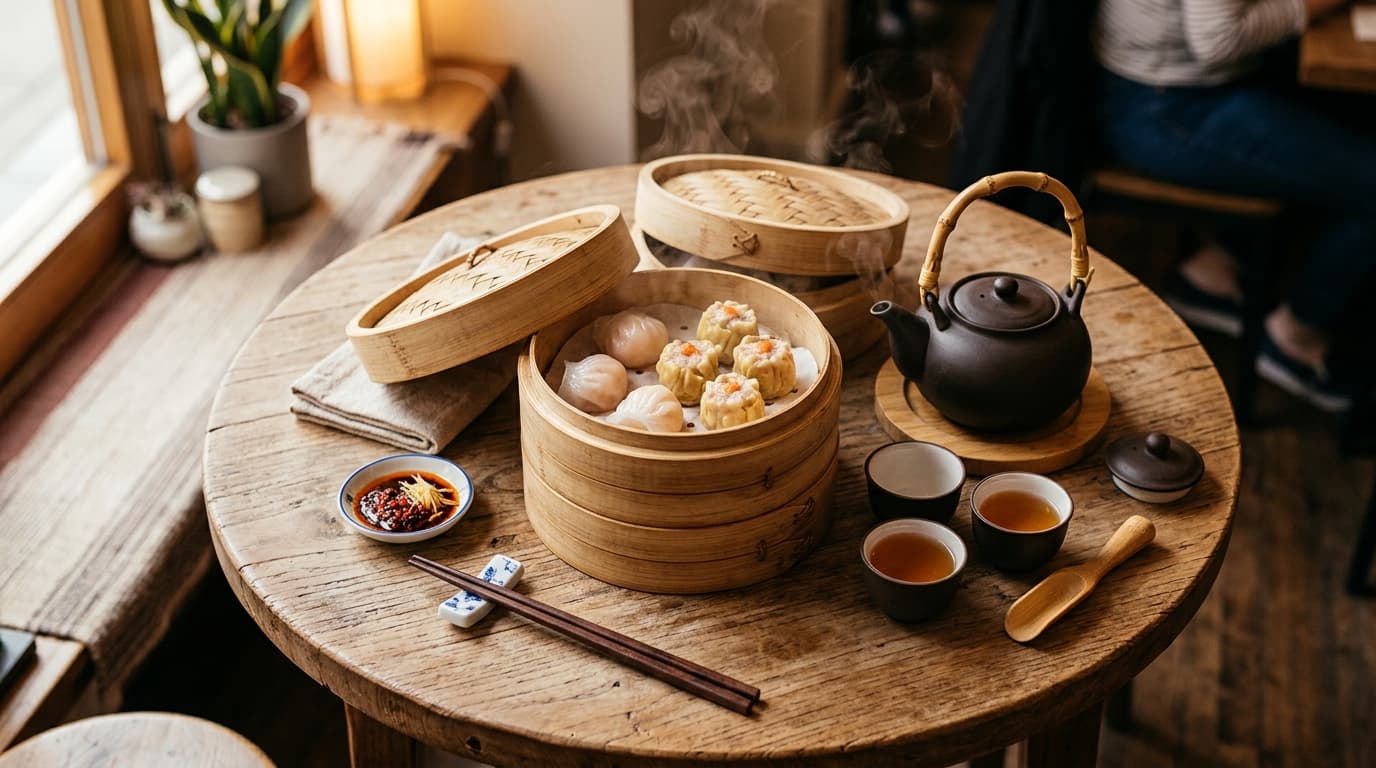
Dim sum, spelled 點心 in Chinese characters and pronounced dim2 sam1 in Cantonese, literally translates as "touch the heart" or "a little bit of heart." The phrase is a poetic way of describing small, carefully prepared dishes that satisfy gently rather than filling you up heavily.
It is one of the most evocative and beautiful food names in any language, and it tells you something important about the experience: dim sum is not just a meal, it is a ritual of small pleasures meant to warm you from the inside out.
Breaking down the characters
- 點 (dim2): means to point, to touch, or a small amount. In this context, it carries the sense of "just a little" or "a touch of"
- 心 (sam1): means heart, mind, or center
Together, 點心 captures the idea of food that just barely touches or lightly nourishes the heart. The name predates the modern dim sum restaurant experience by over a thousand years.
Origin of the phrase
The earliest written references to 點心 go back to the Tang dynasty (618 to 907 CE). Originally the term referred to any light snack or small meal, not specifically the Cantonese tea-house dishes we know today. A soldier might eat dim sum before a march, a scholar might have dim sum while studying, or a merchant might grab dim sum while traveling.
The connection between dim sum and tea drinking came later, in the Song dynasty and especially in Guangdong province during the Qing dynasty. Teahouses along the ancient Silk Road and the trade routes into southern China began serving small dishes to complement tea. This pairing of tea with small savory and sweet snacks became known as yum cha (飲茶, jam2 caa4), literally drinking tea.
Yum cha: the full experience
It is worth knowing that 點心 (dim sum) refers to the food itself, while 飲茶 (yum cha) refers to the whole activity of going out to drink tea and eat dim sum. Many Cantonese speakers will say they are going for yum cha rather than going for dim sum.
The distinction matters because yum cha is really about the social experience. Families gather on weekend mornings at busy restaurants, often with three generations at one table. The tea is poured and refilled constantly. Servers push trolleys stacked with bamboo steamers through the aisles, calling out what is in each basket. Diners point and choose.
Common dim sum dishes and their names
Every dim sum dish has a Cantonese name, usually descriptive or poetic. Here are some of the classics:
- 蝦餃 (haa1 gaau2): shrimp dumplings, the gold standard of dim sum
- 燒賣 (siu1 maai2): pork and shrimp dumplings topped with orange crab roe
- 叉燒包 (caa1 siu1 baau1): steamed buns filled with barbecued pork
- 腸粉 (coeng2 fan2): rice noodle rolls, often filled with shrimp or beef
- 蛋撻 (daan6 taat1): egg tarts with flaky pastry and smooth custard
- 鳳爪 (fung6 zaau2): chicken feet, a beloved texture dish
- 糯米雞 (no6 mai5 gai1): sticky rice with chicken and mushrooms wrapped in lotus leaves
- 蘿蔔糕 (lo4 baak6 gou1): pan-fried turnip cake with dried shrimp and sausage
How dim sum culture spread
Dim sum remained a regional Cantonese tradition for centuries, centered around Guangzhou and later Hong Kong. It became globally known through two channels.
First, Hong Kong's rise as an international city in the 20th century meant that visitors encountered dim sum on their trips there. Hong Kong teahouses from the 1950s onward developed the modern trolley-service format that most people now associate with dim sum.
Second, the Cantonese diaspora carried dim sum to Chinatowns across North America, Europe, Australia, and Southeast Asia. San Francisco, Vancouver, New York, Toronto, Sydney, and London all have substantial dim sum cultures built by Cantonese immigrants. For many non-Chinese diners in these cities, dim sum is their introduction to Cantonese food and culture.
Dim sum beyond the restaurant
The phrase 點心 is also used metaphorically in Cantonese. Saying something touches the heart (點到心) carries a similar sense to the English expression warms the heart. The name of the food and its cultural meaning are intertwined: these are dishes meant to nourish not just the body but also connection, family, and shared moments.
The best dim sum experiences include all of this: the tea, the pushcarts, the noisy crowded dining room, the family at the next table laughing over bamboo steamers, and the moment when the shrimp dumpling hits your mouth. That combination is what 點心 really means.
Learning dim sum vocabulary
If you are traveling to Hong Kong or visiting a Cantonese dim sum restaurant, knowing a few basic phrases and dish names transforms the experience. You can order with confidence, pronounce the dishes correctly, and understand what the trolley servers are calling out.
The YumCha app has a dedicated dim sum lesson series with native audio pronunciations for every dish name, so you can practice before your next visit. It is one of the best ways to absorb not just the vocabulary but the culture behind the food.
Whether you translate 點心 as "touch the heart" or "a little bit of heart," the name captures exactly what dim sum is: small, careful, nourishing, and shared.