
How to order dim sum in Cantonese
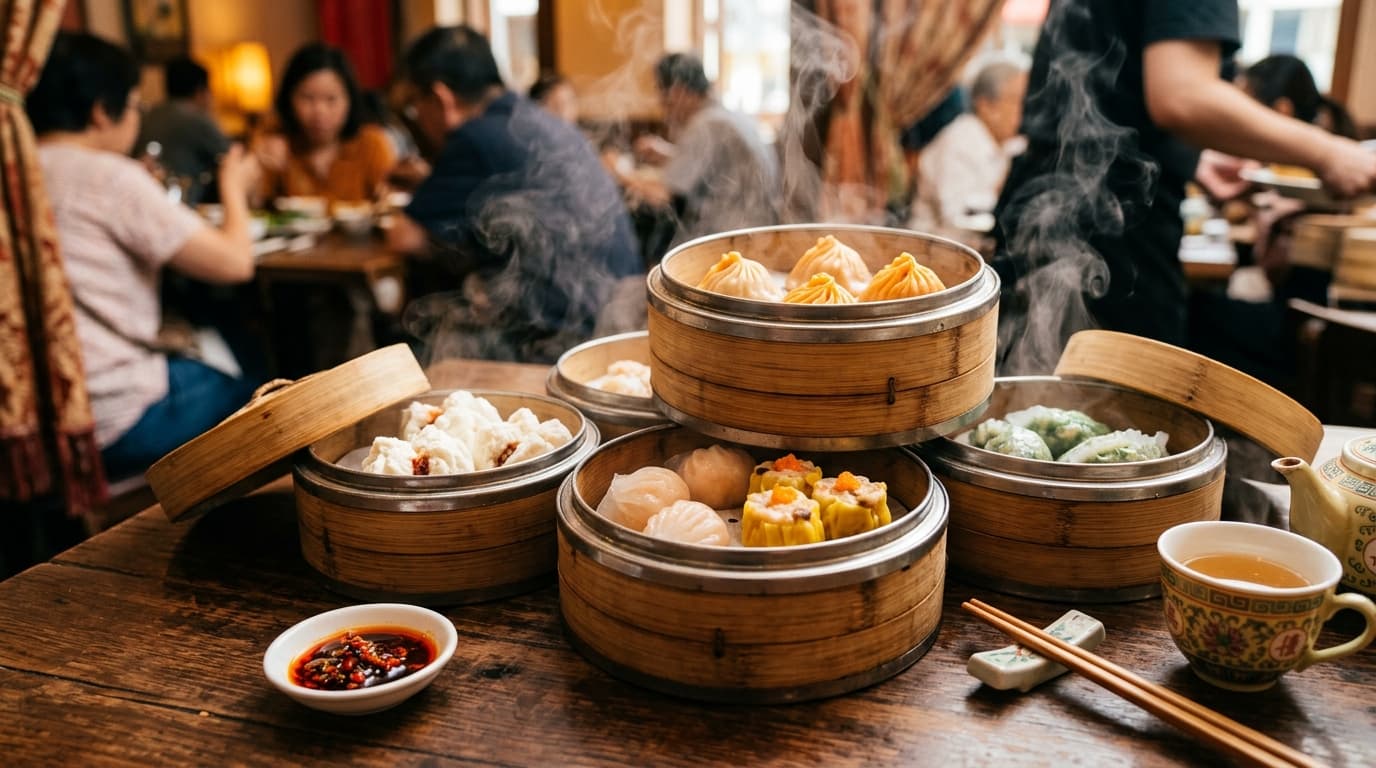
Dim sum (點心 dim2 sam1) is one of the great culinary traditions of the Cantonese speaking world. Whether you are in Hong Kong, Guangzhou, or your local Chinatown, knowing how to order in Cantonese transforms the experience from pointing at pictures to genuinely connecting with the food and the people serving it.
This guide covers everything you need: essential menu vocabulary, how to interact with staff, and the cultural etiquette that locals follow.
Arriving and getting seated
When you arrive at a dim sum restaurant, the host will likely ask 幾位 (gei2 wai2), meaning "how many people?" Reply with the number followed by 位 (wai2):
You might hear 坐呢度 (co5 ni1 dou6), meaning "sit here." If you prefer a different table, you can ask 可唔可以坐嗰度 (ho2 m4 ho2 ji5 co5 go2 dou6): "Can we sit over there?"
The essential dim sum menu
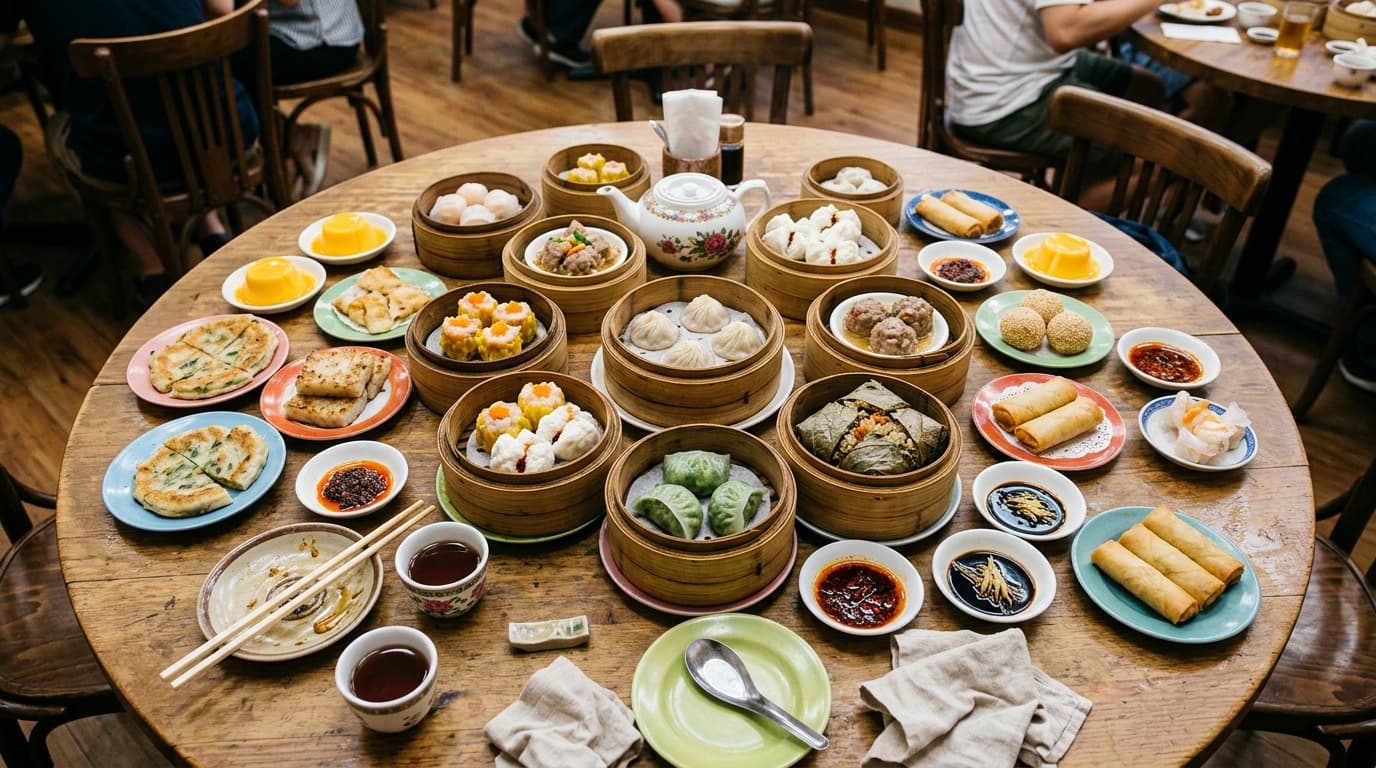
These are the classic dishes you will find at virtually every dim sum restaurant:
Dumplings and buns
- 蝦餃 (haa1 gaau2): shrimp dumplings, the gold standard of dim sum
- 燒賣 (siu1 maai2): pork and shrimp dumplings, open-topped
- 叉燒包 (caa1 siu1 baau1): BBQ pork buns, fluffy steamed
- 小籠包 (siu2 lung4 baau1): soup dumplings
- 流沙包 (lau4 saa1 baau1): salted egg custard buns
- 潮州粉果 (ciu4 zau1 fan2 gwo2): Chiu Chow dumplings
Rice and noodle dishes
- 腸粉 (coeng2 fan2): rice noodle rolls (often filled with shrimp or beef)
- 糯米雞 (no6 mai5 gai1): sticky rice wrapped in lotus leaf
- 炒麵 (caau2 min6): fried noodles
- 粥 (zuk1): congee / rice porridge
Small plates
- 鳳爪 (fung6 zaau2): chicken feet (a classic, try it!)
- 排骨 (paai4 gwat1): steamed spare ribs
- 牛肉球 (ngau4 juk6 kau4): beef meatballs
- 春卷 (ceon1 gyun2): spring rolls
- 蘿蔔糕 (lo4 baak6 gou1): turnip cake
Desserts
- 蛋撻 (daan6 taat1): egg tart
- 芝麻卷 (zi1 maa4 gyun2): sesame rolls
- 馬拉糕 (maa5 laai1 gou1): Malay sponge cake
- 楊枝甘露 (joeng4 zi1 gam1 lou6): mango pomelo sago dessert
How to order
Ordering style varies by restaurant. At traditional trolley-service restaurants, carts are pushed around and you point at what you want. The phrase 要呢個 (jiu3 ni1 go3, "I want this one") or simply 要 (jiu3, "want") while pointing works perfectly.
At modern dim sum restaurants with paper order forms, you mark what you want with a pen. The categories are usually labelled by size and price: 小點 (siu2 dim2, small), 中點 (zung1 dim2, medium), 大點 (daai6 dim2, large), 特點 (dak6 dim2, special), and 頂點 (ding2 dim2, premium).
To call a waiter's attention, say 唔該 (m4 goi1). To ask for something specific: 唔該,要一籠蝦餃 (m4 goi1, jiu3 jat1 lung4 haa1 gaau2), meaning "Excuse me, I'd like a steamer of shrimp dumplings." The word 籠 (lung4) means steamer basket.
Drinks
Tea is central to dim sum. Your table will usually be asked what tea you want when you sit down: 飲咩茶 (jam2 me1 caa4), "what tea will you drink?"
- 普洱 (pou2 nei5): pu'er tea, the classic dim sum choice
- 菊花 (guk1 faa1): chrysanthemum tea
- 鐵觀音 (tit3 gun1 jam1): tieguanyin oolong
- 壽眉 (sau6 mei4): shou mei white tea
- 茉莉花 (mut6 lei6 faa1): jasmine tea
When someone pours tea for you, tap the table twice with your index and middle fingers. This is a silent "thank you" that comes from Cantonese tea culture. When you need a refill, leave the teapot lid slightly open and a waiter will come to refill it.
Finishing up
To ask for the bill: 唔該,買單 (m4 goi1, maai5 daan1). Some restaurants bring the bill on a clip; others calculate based on the plates and steamers on your table.
To say the food was delicious: 好好食 (hou2 hou2 sik6). Staff always appreciate hearing this.
Dim sum is best enjoyed slowly, with good company. Do not rush. Order a few dishes at a time, wait for them, eat, then order more. The whole experience can last one to two hours and that is perfectly normal.
Learning these dim sum words is one of the most rewarding parts of studying Cantonese. You can start practising them immediately at your next dim sum meal. YumCha actually includes a "Dim Sum Basics" unit in its curriculum that covers exactly these scenarios with native audio, so you can hear how each dish name sounds before you walk into the restaurant.
Related articles

100 essential Cantonese words and phrases for beginners
The 100 most useful Cantonese words and phrases for beginners. Greetings, food, numbers, directions, and daily essentials with Jyutping.

Cantonese slang and expressions locals actually use
Go beyond the textbook with Cantonese slang and expressions that native speakers use every day. Sound more natural and connected.
Cantonese lessons for beginners
Start learning Cantonese with these beginner lessons. Greetings, numbers, food ordering, and essential phrases with Jyutping.