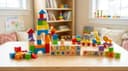
zyu2 faan6 zai2煮飯仔煮饭仔
Jyutpingzyu2 faan6 zai2
Yalejyú faahn jái
Definition
To play house or play cooking games, or figuratively, to cook and prepare meals.
- to play house; to play cooking games
- figurativeto cook; to prepare a meal
colloquialdaily actionsfood
How it's used
Refers specifically to children pretending to cook or play house, often using toy kitchenware. While it literally translates to cooking rice, the suffix 仔 adds a diminutive, playful quality that signals the activity is make-believe. Adults sometimes use it metaphorically to describe someone who is cooking a very simple or small meal for themselves, though this usage is more self-deprecating.
Measure word
coeng4場chèunghExamples
When I was little, I loved playing house with my cousin.
Are you two playing house?
Related words
Common phrases
to play house
Common mistake
Do not use this to describe actual cooking for a meal, as it implies the food is fake or the activity is just a game. If you are actually preparing dinner, use 煮飯 instead.
Grammar color guide
Noun
Verb
Adjective
Adverb
Pronoun
Classifier
Particle
Connector
Grammar guides
- Aspect markersCantonese has no tenses, but it does have aspect markers. Learn how zo2, gwo3, gan2, and hai2 dou6 show completion, experience, and ongoing action.
- How oftenUsually, sometimes, all the time, rarely, never. All five sit in one slot, between the subject and the verb.
- In 30 secondsThe whole language at a glance. No tenses, no plurals, six tones, sentence particles. Read this before you dive into any specific topic.