caa4 jyu4 faan6 hau6茶餘飯後茶余饭后
Jyutpingcaa4 jyu4 faan6 hau6
Yalechàh yùh faahn hauh
Definition
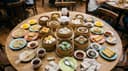
Leisure time; the free time after a meal when one has nothing to do.
colloquialdaily actionspeople
How it's used
This idiom carries a slightly nostalgic or traditional tone, often evoking images of people sitting around a table after a meal. While it literally refers to the time after eating, it is frequently used to describe any casual, low-stakes activity done to pass the time. It is common to see it paired with words like 話題 or 消遣 to describe the content of these relaxed conversations.
Examples
Is this gossip news your pastime for when you have nothing to do?
Related words
Common phrases
topics of conversation during leisure time
pastimes for leisure time
Common mistake
Learners often mistake this for a literal description of a specific time of day, but it is more about the state of being relaxed and unoccupied. Avoid using it to describe formal or scheduled breaks, as it implies a sense of aimless, informal leisure.
Grammar color guide
Noun
Verb
Adjective
Adverb
Pronoun
Classifier
Particle
Connector
Grammar guides
- Directional complementsThe small words added after a verb to show direction of movement, like up, down, out, in, and back. Common in everyday Cantonese.
- DemonstrativesThis and that with 呢 and 嗰, the personal pronouns, and how 哋 turns I, you, and he into we, you all, and they.
- Resultative complementsSticking a result word onto a verb to show how it turned out, like eat until full or look and find. A productive everyday pattern.