

Health and the body
Body parts, symptoms, and the clinic
Feeling unwell is stressful enough without the words failing you too. This unit starts with the body itself, from 頭 (tau4) and 手 (sau2) to 肚 (tou5) and 眼 (ngaan5), then moves on to symptoms like 頭痛 (tau4 tung3), 發燒 (faat3 siu1) and 咳 (kat1). From there you head to the 診所 (can2 so2), where you see the doctor, ask questions and pick up medicine at the 藥房 (joek6 fong4).
The grammar lesson gives you the language of looking after someone: 應該 (jing1 goi1) to tell a friend what they should do, and 冇琴日咁痛 (mou5 kam4 jat6 gam3 tung3), “not as sore as yesterday,” to say things are improving. It is a practical stretch of Level 2 in this Cantonese course, and the kind of language you hope not to need but will be very glad to have.
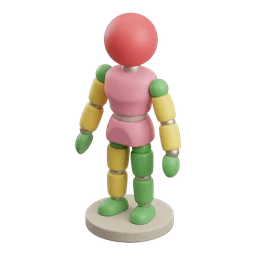 The bodyName the main parts of the body: head, hands, legs, belly, and eyes
 SymptomsSay you feel sick, where it hurts, and describe a headache, fever, or cough
 At the clinicSee a doctor, ask about symptoms, take medicine, and find the clinic and pharmacy
 You should
 Unit 5 review
Frequently asked questions
How do you say I'm sick in Cantonese?
People often start with 唔舒服 (m4 syu1 fuk6), “not feeling well,” before naming the exact symptom. If it is more than a passing feeling, 可能病咗 (ho2 nang4 beng6 zo2) means “I might have gotten sick.”
How do you say I need to see a doctor in Cantonese?
Use 睇醫生 (tai2 ji1 sang1), “to see a doctor.” 我想去診所睇醫生 (ngo5 soeng2 heoi3 can2 so2 tai2 ji1 sang1) means “I want to go to the clinic to see a doctor.”
How do you give advice in Cantonese?
Put 應該 (jing1 goi1), “should,” before the action. 你應該睇醫生 (nei5 jing1 goi1 tai2 ji1 sang1) means “you should see a doctor.”
What are the parts of the body in Cantonese?
This unit starts with five: 頭 (tau4) for head, 手 (sau2) for hand, 腳 (goek3) for leg or foot, 肚 (tou5) for belly and 眼 (ngaan5) for eye.